
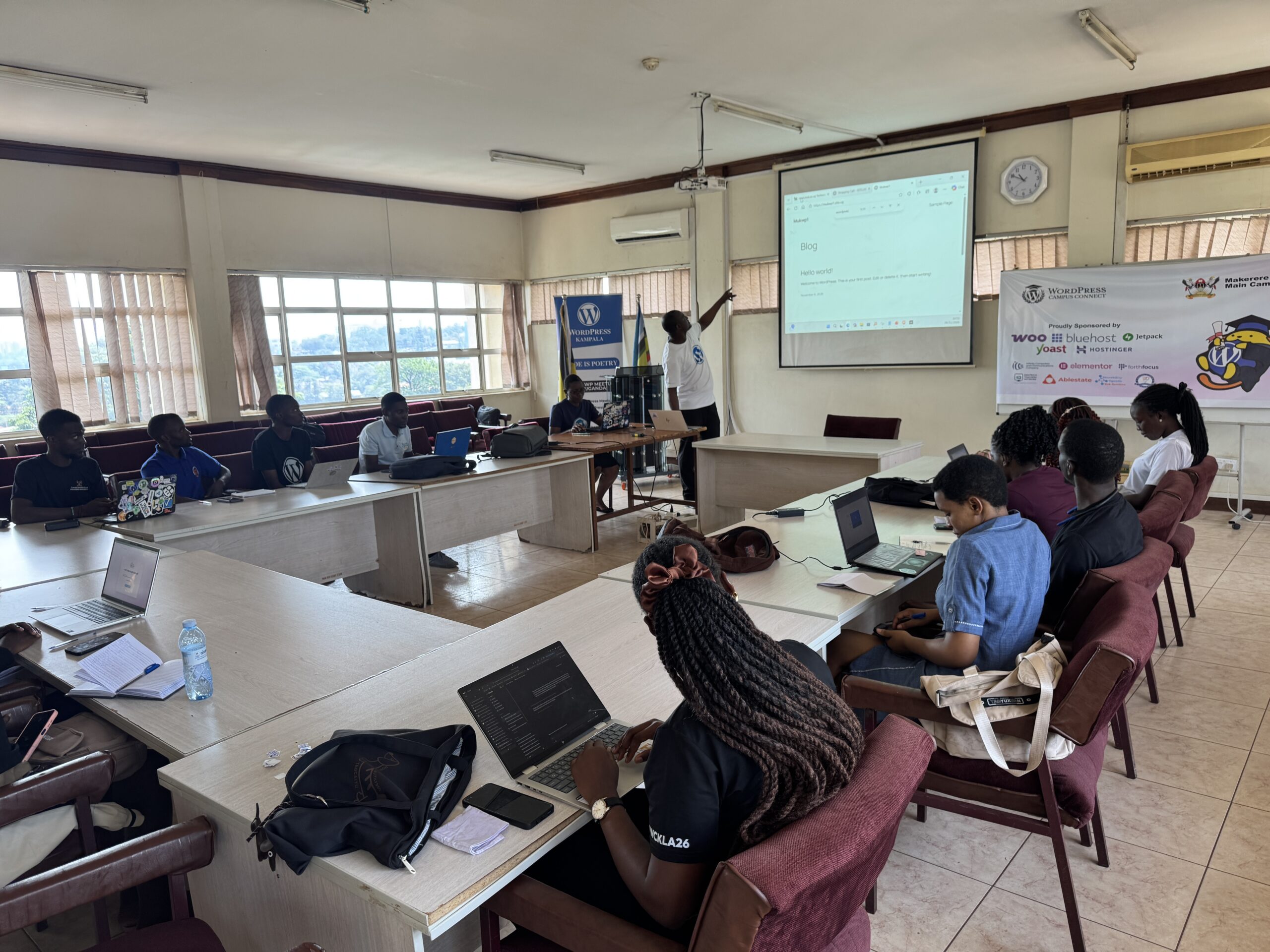
Returning to Makerere University on 6th November 2026 for WordPress Campus Connect was more than just another speaking engagement. It was a homecoming to the institution where I began my professional ICT journey and graduated in 2017.
Interestingly, when I graduated from Makerere, I had knowledge of programming and coding, but I had not been introduced to content management systems (CMS). It was only when I entered the technology field that I realised how important platforms such as WordPress had become in everyday web development. I discovered that many organisations, businesses and individuals rely on WordPress to build and manage their websites.
That experience has shaped one of the messages I continue to share with students. Learning programming languages is important, but it is equally beneficial to understand how to use popular content management systems. I encourage students to develop both skills because the technology industry requires people who can not only write code but also work with practical tools used to build and manage digital platforms.
During the event, I had the opportunity to facilitate a practical session on Seven Simple Steps to Creating a Fully Functional Website Using WordPress. Students from different universities gathered to explore website development and gain practical knowledge of the platform.
We explored how to identify reliable WordPress themes by looking at their design, update history, developers and available support. I demonstrated how to install and activate themes, create essential website pages and customise websites using the WordPress Site Editor, also known as Gutenberg.
I also took participants through the Document Overview feature, which makes it easier to navigate different website blocks, including headers, footers, images and buttons. We explored how to configure navigation menus, create dropdown menus and link website pages so that visitors can easily find the information they need.
The practical demonstration also exposed some of the common challenges developers encounter. At one point, WordPress rejected an image because it exceeded the hosting account’s maximum upload size. This provided an opportunity to explain image compression and hosting configurations. I also introduced WordPress plugins and how they extend website functionality.
Beyond the practical training, I encouraged students to start building websites even before they get clients. A personal website can become a portfolio, demonstrate one’s abilities and create opportunities for freelancing, employment and entrepreneurship. We also discussed the possibility of providing students with free practice accounts to continue learning and experimenting with WordPress.
Another important discussion focused on building a WordPress community within universities. I introduced the idea of establishing a WordPress Student Club at Makerere, where students can meet regularly, share knowledge, organise workshops and work on practical projects.
I explained how WordPress meetups and WordCamps bring people together to learn, network and contribute to the global community. Students were encouraged to identify student co-organisers, find a faculty patron and work towards having the club officially recognised by the university.
Through such a club, students could organise hackathons, participate in website development competitions, contribute to open-source projects and develop digital solutions for their university and surrounding communities. They would also have opportunities to connect with the Kampala WordPress Meetup community and receive mentorship from experienced developers.
I shared the example of Magoola Emma, a student from Mulago Paramedical College who developed a project called Life Wellness Hub using WordPress and went on to win a website projects competition. His experience demonstrates that WordPress is not only for students pursuing computing courses. Anyone with an idea and the willingness to learn can use it to develop meaningful solutions.
I sincerely appreciate the students who participated, asked questions and engaged in the discussions. I also extend my gratitude to Hostinger, Jetpack, Bluehost, Woo, Yoast, Infinity Computers and Communication Company, EdTech Teachers Network and Sharebility Uganda Limited for supporting this initiative.
Returning to Makerere after graduating in 2017 and having the opportunity to share practical knowledge with students was personally fulfilling. It reminded me of how much the technology industry has evolved and the importance of preparing students with skills that complement their academic programmes.
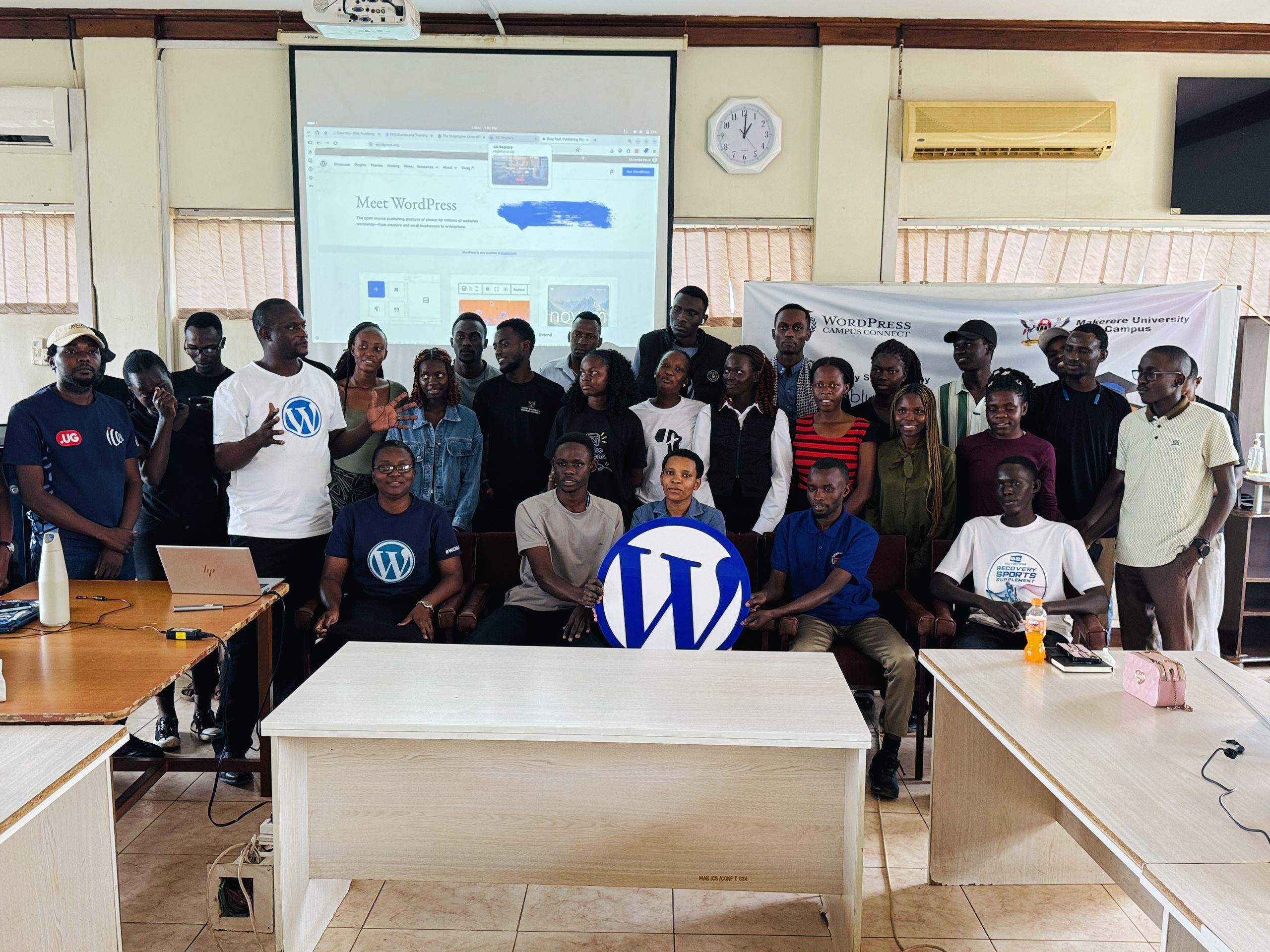
My encouragement to students remains simple. Do not limit yourselves to what you learn in lecture rooms. Learn to code, explore content management systems such as WordPress, build projects and develop portfolios. The skills you acquire today could become the foundation of your professional opportunities tomorrow.
It was good to be back home, not just as a former student, but as someone returning to share knowledge and contribute to the next generation of technology professionals.